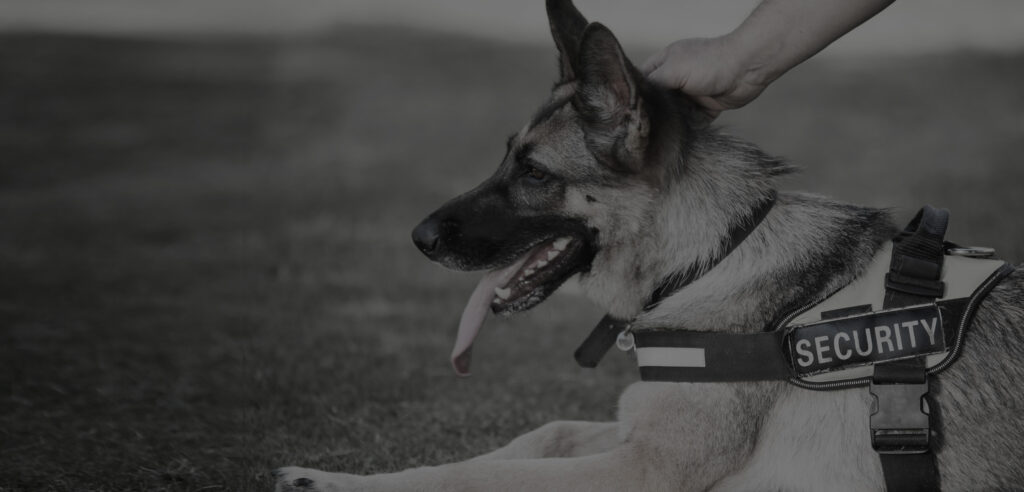
In today’s volatile society, the need for robust K9 security services is increasingly evident. The ability of professionally trained dogs to detect explosives, narcotics, and other threats can be a critical element in ensuring the safety of individuals and property. Beyond their powerful sense of smell, these dogs also provide a physical deterrence and can be used for crowd control, search and rescue, and other specialised tasks.
Moreover, K9 units are highly effective in large areas or crowded events where traditional security methods may be less efficient. They offer a level of flexibility and adaptability that is unmatched by technology or human resources alone. The mere presence of a K9 unit can act as a powerful deterrent to potential criminals, making them a valuable addition to any comprehensive security strategy.
The benefits of robust K9 security services extend beyond just their functional capabilities. There is also an undeniable psychological impact when a well-trained K9 unit is present. The message is clear: this is a secured area, and any unauthorised activity will be swiftly identified and dealt with. This creates an environment of safety and security, contributing to overall peace of mind.
Foundations of Proffering K9 Security in Northamptonshire
In Northamptonshire, the proffering of robust K9 security services is built on several foundations. First and foremost, it is necessary to have a team of highly trained and skilled handlers. These individuals must be experienced in working with dogs, capable of reading their signals and reactions, and able to respond effectively in high-pressure situations.
In addition to a well-trained handler, the success of K9 security services depends on the quality of the dogs themselves. This means selecting breeds known for their intelligence, obedience, and ability to be trained for specific tasks. These dogs then undergo rigorous training to ensure they can perform their duties effectively and reliably.
Another crucial foundation is the establishment of a comprehensive operational strategy. This includes identifying the areas and situations where K9 units will be most effective, devising response strategies for various potential threats, and regularly reviewing and updating these strategies as circumstances change. The goal is to ensure that K9 security services in Northamptonshire are not only effective but also reliable and responsive.
Training Processes: Building a Reliable K9 Team
Building a reliable K9 team requires an intensive and comprehensive training process. This begins with basics like obedience and socialisation, but quickly progresses to more specialised skills. Depending on their intended role, dogs may be trained in bomb or drug detection, search and rescue, or other specific tasks. This training is both physically and mentally demanding, and requires a deep bond of trust and understanding between dog and handler.
In addition to task-specific training, K9 teams also undergo extensive training in a variety of environments and scenarios. This might include crowded events, large open spaces, various weather conditions, and so on. The goal is to ensure that the team can perform reliably regardless of the circumstances.
Of course, ongoing training and development are just as important as initial training. Just as human security personnel must regularly refresh their skills and knowledge, so too must K9 teams. Regular assessments and refresher courses ensure that these teams continue to provide the highest level of security.
Assessing Potential Threats and Building Response Strategies
Assessing potential threats is a critical part of any security strategy. In the case of K9 security, this involves considering a wide range of factors, from general crime rates to specific threats to the site or event in question. Once potential threats have been identified, the next step is to develop a response strategy tailored to these risks.
Building effective response strategies requires a deep understanding of the capabilities and limitations of K9 units. This involves not only recognising the unique strengths of these teams – like their ability to detect hidden threats or control crowds – but also their limitations. For example, while a K9 unit can quickly search a large area, they may not be as effective in a densely populated or highly cluttered environment.
Of course, building these strategies is not a one-time process. Instead, they must be regularly reviewed and updated based on new information or changing circumstances. This ongoing reassessment is essential for maintaining the effectiveness and reliability of K9 security services.
Implementing Effective K9 Security Measures on Site
Implementing effective K9 security measures on site requires careful planning and coordination. It’s not enough to simply deploy a dog and handler; the deployment must be part of a larger security strategy. This might involve using K9 units to patrol perimeter areas, deploy at entry and exit points, or roam within a site to deter potential threats.
However, effective implementation also requires careful consideration of the unique characteristics of the site. The size, layout, and nature of the site, as well as the expected crowd size and behaviour, all influence how and where K9 units should be deployed. In addition, consideration must also be given to the welfare of the dogs themselves, ensuring they are given appropriate breaks and are not exposed to unnecessary stress or danger.
Finally, effective implementation also requires clear communication, both with other security personnel and with the public. Handlers must be able to quickly and accurately report any potential threats they detect, and the presence and purpose of K9 units must be clearly communicated to the public to avoid confusion or unnecessary alarm.
Continuous Evaluation and Enhancement of K9 Security Services
Continuous evaluation and enhancement of K9 security services are crucial for maintaining their effectiveness. This involves regular assessments of both the dogs and their handlers, ensuring that they continue to meet the highest standards of training and performance. Any areas of weakness or concern are addressed through additional training or other interventions.
Similarly, operational strategies must also be regularly evaluated and updated. This might involve analysing data on incidents and responses, conducting drills or simulations, or seeking feedback from other security personnel, clients, and the public. The goal is to identify any areas for improvement and implement changes as necessary.
Of course, continuous enhancement isn’t just about fixing problems; it’s also about looking for opportunities to improve. This might involve exploring new training methods or technologies, learning from the experiences of other K9 units, or seeking opportunities for collaboration and knowledge exchange. The aim is to ensure that K9 security services in Northamptonshire continue to evolve and improve, meeting the changing needs of the community.
Future Outlook: The Advancement of K9 Security Services in the UK
Looking to the future, the advancement of K9 security services in the UK seems promising. With increasing recognition of the unique skills and capabilities of these teams, there is likely to be continued demand for their services. Moreover, as new training methods and technologies are developed, the effectiveness and efficiency of K9 units are likely to further improve.
At the same time, there is also a growing recognition of the need for strong regulatory standards and oversight for K9 security services. This can help to ensure that all teams meet the highest standards of training and conduct, enhancing their effectiveness and the trust and confidence of the public.
Ultimately, the future of K9 security services in the UK will depend on a combination of factors: ongoing training and development, effective regulation, and continued recognition of the value and utility of these teams. With these elements in place, K9 security services are likely to continue to play a vital role in maintaining public safety and security.